
Beyond Therapy Rooms: My Journey as a Psychologist in Urban Communities
Aug 28 2026 / Posted in Health
- By Laxmi Soni
As a psychologist, I was trained to work in structured environments—quiet rooms, scheduled sessions and defined therapeutic approaches. But working in Mumbai’s informal settlements reshaped my understanding of what mental health care truly means. Here, therapy does not begin with a diagnosis. It begins with trust.
Where Mental Health Meets Daily Survival
In the communities I work with, people rarely come forward saying they feel “anxious” or “depressed.” Instead, they speak of: Constant headaches, Sleep disturbances, Irritability or exhaustion. As I spent more time listening, it became clear that these were not just symptoms, they were reflections of deeper struggles like financial stress, domestic conflicts, caregiving burdens, and uncertainty about the future. Mental health, here, is inseparable from life circumstances.
A Story That Stayed with Me
I remember meeting a young woman during one of my visits. She initially spoke very little, often saying, “Sab theek hai.” (Everything is fine.) Over multiple visits, she slowly began to open up. She shared how she felt constantly overwhelmed managing household responsibilities, caring for children, and dealing with frequent conflicts at home. She had no space to express her emotions, and over time, it started affecting her sleep and overall well-being.
There was no single “therapy session” that changed things.
Instead, it was consistent presence, small conversations, validating her feelings, helping her identify small, manageable coping strategies. Gradually, she began to express herself more freely. She started taking small steps for her own well-being—something as simple as taking short breaks or speaking up when needed. That shift, though small, was powerful.
Redefining Therapy
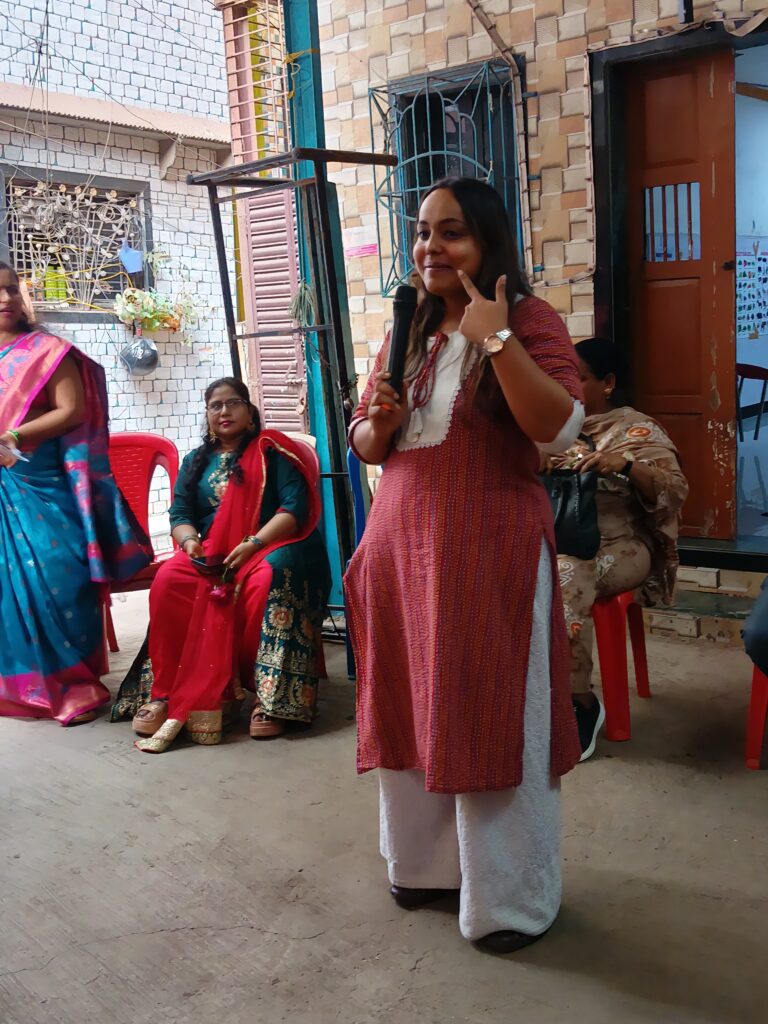
Working in such settings has taught me that therapy is not always formal. Sometimes, it looks like sitting on a floor during a home visit, having conversations in shared community spaces yet maintaining the confidentiality, conducting group sessions where individuals realise they are not alone, using simple language instead of clinical terms. It is less about techniques and more about connection, cultural understanding and adaptability is what I realised.
Breaking the Silence Around Mental Health
Stigma remains one of the biggest challenges. Many individuals hesitate to seek support due to fear, judgment, or lack of awareness. This makes community engagement crucial—creating safe spaces where people feel heard without being judged. Over time, I have seen how awareness slowly transforms into acceptance.
What the Community Teaches Us
Despite facing multiple adversities, the strength within these communities is remarkable. Women supporting each other, young individuals eager to learn and community members stepping forward to help others—these moments highlight that healing is not just individual, but collective.
A Personal Transformation
This journey has changed me deeply. It has taught me:
Patience over quick results
Listening over advising
Presence over perfection
Most importantly, it has reminded me that mental health care is not confined to clinics—it lives in everyday interactions.
Conclusion
Working as a psychologist in urban communities is challenging, yet incredibly meaningful. It pushes us to go beyond textbooks and truly understand people in their contexts. Because sometimes, the most impactful work we do is not in structured sessions but in simply being there, consistently and compassionately.
Share: