Sustaining Change: When Communities Move from Participation to Ownership
Oct 23 2026 / Posted in Health
In many pockets of Mumbai’s M/East ward, the same challenges tend to resurface—missed immunizations, gaps in accessing social protection schemes, unresolved cases of violence, or delays in maternal and child health care.
M/East ward is one of Mumbai’s most vulnerable urban pockets, where families navigate multiple and overlapping challenges in their everyday lives. For many residents living in informal settlements, access to basic necessities such as water, electricity, sanitation, safe housing, and affordable transportation continues to remain uncertain. In such realities, health often becomes a secondary priority—not because communities do not value it, but because survival needs demand more immediate attention.
Since 2012, SNEHA has been working across four vulnerable communities of M/East ward—Indira Nagar, Janta Nagar, Dr. Zakir Hussain Nagar, and Gautam Nagar—supporting women, children, and families to access essential health, nutrition, social protection, and violence prevention services. Through sustained community engagement and partnership with public systems, SNEHA has worked to strengthen both service delivery and community ownership of local development processes.
This vulnerability has historically had a direct impact on maternal and child health outcomes. Pregnant women, mothers, and young children frequently face barriers in accessing timely healthcare services, including immunization, nutrition support, and routine follow-ups.
One such challenge emerged around immunization access. Earlier, families were expected to travel to facility-based immunization camps, which often meant losing daily wages, arranging transport, managing household responsibilities, and spending additional time and money. For many families, especially women with young children, these barriers reduced regular participation in immunization services.
Through continuous community engagement and advocacy with public systems, SNEHA worked closely with the health department to highlight these ground realities. Over time, this contributed to a shift from facility-based immunization camps to more accessible field-level camps within the community itself. This transition significantly improved accessibility for families and demonstrated how sustained collaboration between communities and systems can make services more responsive to local realities.
Over the years, support systems have existed. Frontline workers are present. Community volunteers are active. And yet, progress is often uneven. The reason is not always the absence of effort—but the absence of connection. One person follows up on a case. Another helps a neighbour access a service. A frontline worker conducts visits. But these efforts often remain disconnected, making it difficult for change to sustain.
This raises an important question:
Can lasting change happen if individuals continue to work alone?
A Journey of Learning and Unlearning
SNEHA’s work in M/East ward began over a decade ago with direct interventions—home visits, awareness sessions, and close engagement with public systems. These efforts ensured that essential services reached the last mile.
These experiences also shaped an important realization—that sustainable health outcomes in vulnerable communities cannot be achieved through service delivery alone, but through stronger community ownership, collective action, and responsive systems.
As communities became more aware and systems more responsive, the approach evolved. The focus shifted from “doing for the community” to “working with the community”. Volunteers began taking on more responsibility, and local leadership started to emerge.
But one gap persisted—efforts were present, yet often not aligned.
Through focused group discussions with community volunteers, regular field engagement, and a review of existing evidence and community-led models, SNEHA reflected on a key question: How can community volunteers be sustained as a collective force for change rather than functioning as isolated individuals? The learning was clear—lasting community action requires a structure that nurtures leadership, collective identity, and mutual accountability.
From Community Volunteers to Collective Leadership
Since 2016–2017, SNEHA has nurtured a strong network of approximately 530 community volunteers across its four intervention areas. Primarily women from within the community—many of whom are housewives with limited formal education—these volunteers have consistently stepped forward to support their communities by helping families access services, raising awareness, and responding to local issues.
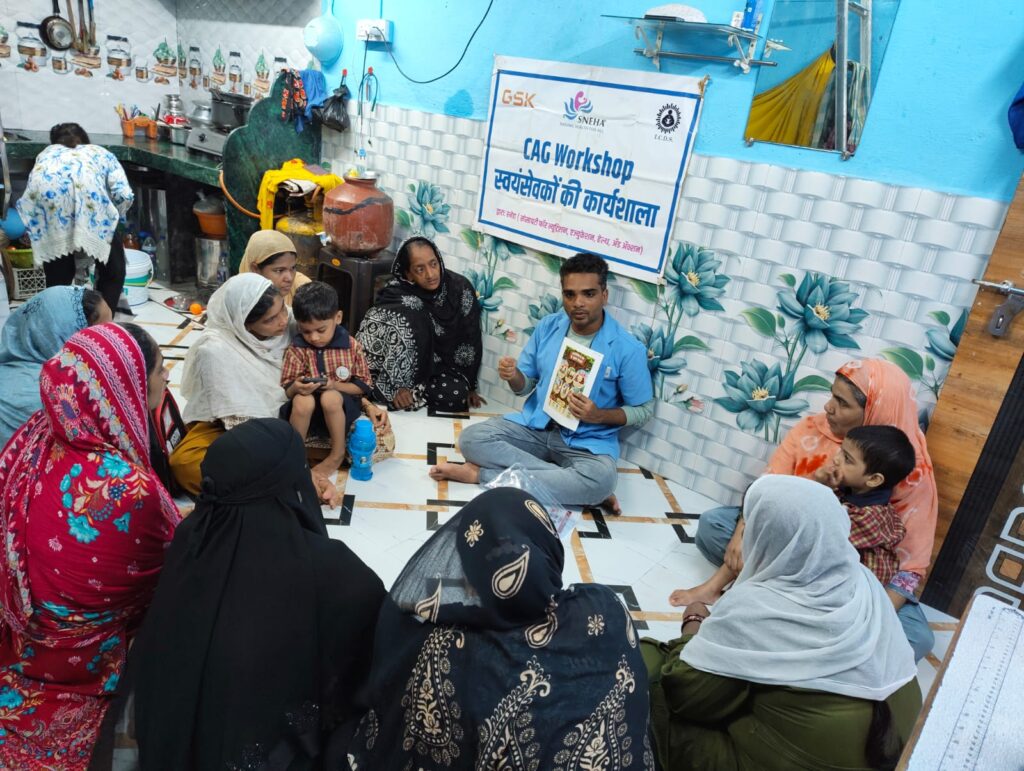
This volunteer network includes Community Action Group (CAG) members, among whom Sanginis and Para Legal Volunteers (PLVs) have emerged as key community resources. Approximately 10 Para Legal Volunteers in each community have been trained to support survivors of violence, facilitate referrals, and improve access to justice. Their strength lies in their lived experiences and deep-rooted connections—they understand local realities in ways that external systems often cannot.
As their engagement deepened, the need for stronger internal leadership became evident—individuals who could guide discussions, organize efforts, and sustain momentum.
In response, a step-up layer of leadership was created from within this cadre. In 2025, Community Champions were identified and selected from each intervention area based on their interest, commitment, and ability to mobilize others. Para Legal Volunteers continued to be nurtured to support communities in addressing issues related to violence and access to justice.
These roles did not come from outside—they emerged from within the community, building on years of trust.
This marked a shift: from participation to structured, community-led leadership.
When Connections Begin to Form
As this evolution unfolded, another realization emerged—these individuals and groups were all part of the same space, yet not always working together.
In one instance, a Sevika, an ASHA worker, and two CAG members were each following up on the same malnourished child. Each was making efforts—home visits, counselling, referrals—but without awareness of the others’ involvement.
It was only when they came together during a local meeting that the situation changed. Roles became clearer, follow-ups were coordinated, and the family began receiving consistent support.
What shifted was not effort—but alignment.
This moment reflected a larger truth:
communities function as ecosystems, and outcomes improve when these connections are made visible and intentional.
Strengthening Collective Action on the Ground
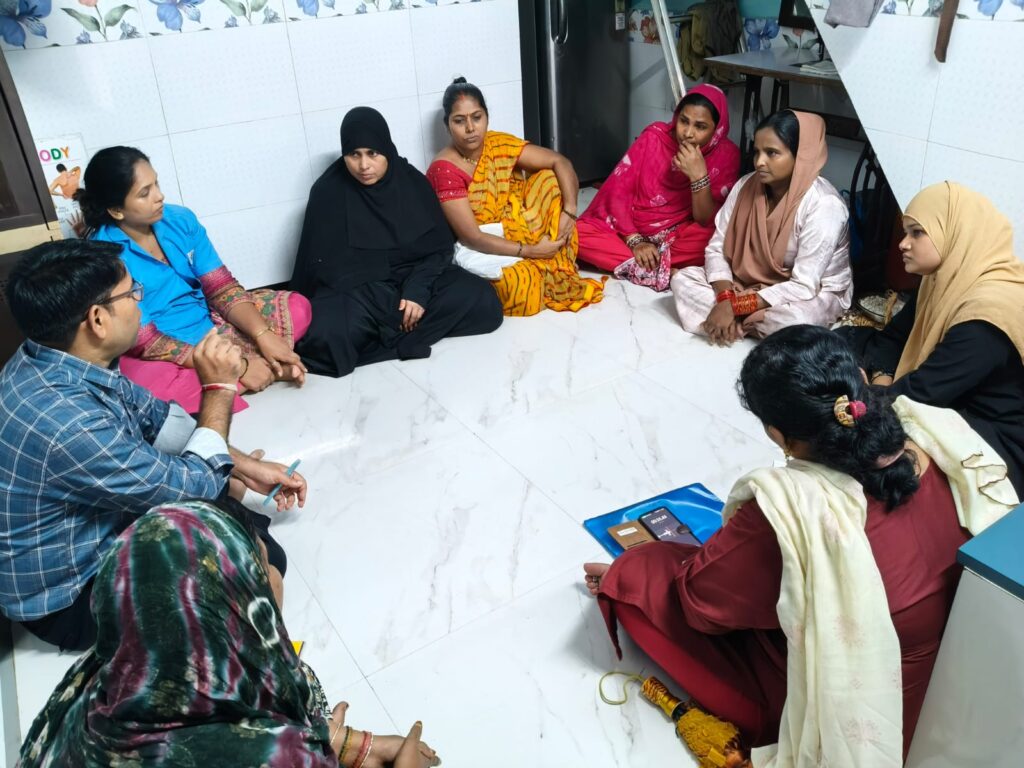
Building on these learnings, SNEHA has initiated a structured Leadership Development Process (LDP) to strengthen the capacity, engagement, and collective leadership of Community Champions. The process is rooted in a community leadership model that places volunteers at the centre of identifying and addressing local issues. Rather than implementing activities on their behalf, SNEHA's role is to provide ongoing guidance, mentoring, and capacity building, enabling volunteers to gradually take ownership of community processes and solutions. The approach recognizes that leadership is built through continuous learning, practice, reflection, and support.
The LDP is designed to move beyond individual participation and create a cadre of community leaders who can work collectively to address local challenges and sustain change over time. Through quarterly workshops, Community Champions strengthen their leadership skills through sessions on Peer Support and Team Building, Advocacy and Problem Solving, From Participation to Partnership, and Citizenship and Citizens’ Rights. These workshops are complemented by ongoing mentoring and engagement opportunities that encourage Champions to see themselves not only as volunteers but also as active partners in community development.
To maintain momentum between workshops, bimonthly touchpoints provide opportunities for engagement, reflection, peer learning, and progress tracking. These are complemented by monthly field-level follow-ups by SNEHA staff, who support Community Champions in implementing action plans, addressing challenges, and strengthening their leadership practice on the ground.
To create greater focus and ownership, Community Champions have been organized into four thematic groups based on key community priorities: Social Protection Schemes (SPS), Gender-Based Violence (GBV), Maternal and Child Health (MCH), and Community Development—including sanitation, livelihoods, civic action, and strengthening Self-Help Groups. Through facilitated and structured discussions, Champions collectively identify local issues, develop action plans, and work towards solutions within their communities.
An equally important component of the process is peer learning and succession planning. Experienced Community Champions are mentoring emerging leaders, creating a second line of leadership that can sustain momentum, strengthen community ownership, and ensure continuity of collective action in the future.
Through this approach, Community Champions are not only enhancing their individual capacities but also learning how to work together, coordinate efforts, mobilize resources, and strengthen community-led development processes that can be sustained beyond project support.
Creating Spaces That Hold People Together
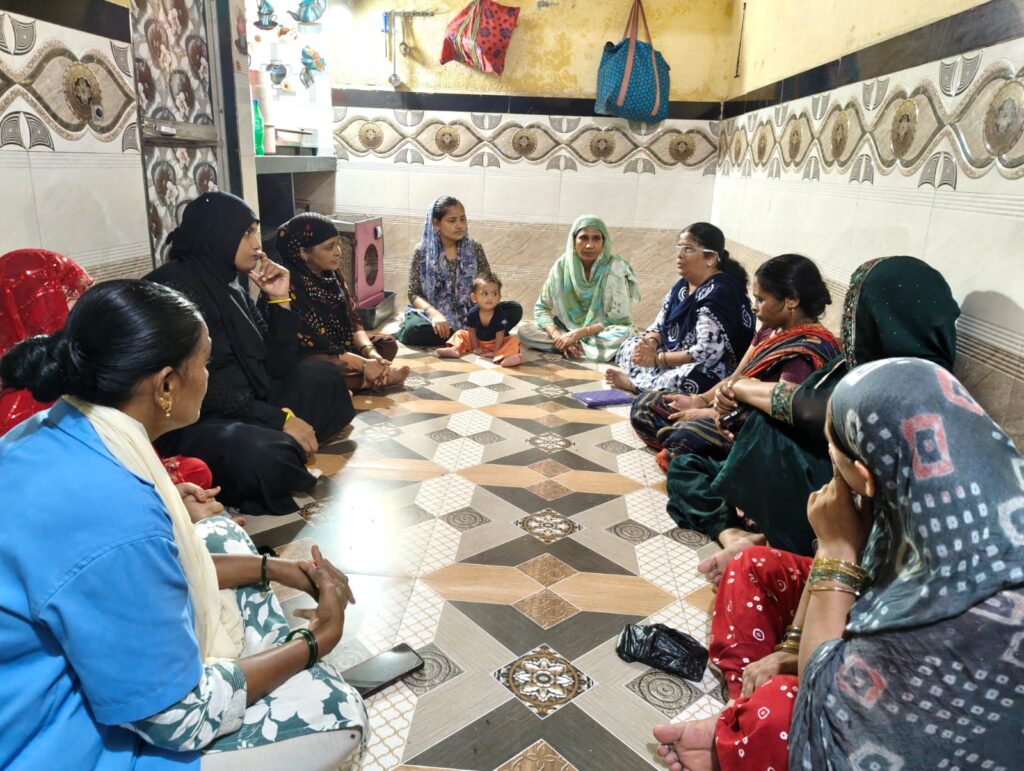
As these efforts progressed, one insight became increasingly important—for change to sustain, people need platforms that bring them together consistently. Discussions with volunteers highlighted that while many were motivated to contribute to community development, economic aspirations and opportunities for mutual support often influenced their long-term engagement. This led SNEHA to pilot the formation of Self-Help Groups (SHGs) as a way to strengthen both collective action and sustainability.
More than financial collectives, these SHGs are envisioned as community-owned spaces where women can come together regularly, support one another, and build stronger social networks. Rather than creating parallel structures, SNEHA is facilitating linkages with existing resources and opportunities available through government systems and partner institutions working in this area. Beyond strengthening financial resilience, the SHGs are intended to provide a sustained platform for peer support, community engagement, and collective problem-solving, while reinforcing local ownership and long-term sustainability.
Recognizing that sustainability depends on local ownership, the process is being undertaken in collaboration with the municipal system (BMC). Across communities, SHGs are being formed with flexibility, bringing together experienced volunteers and other community members from different lanes and neighbourhoods. The process is gradual—awareness is still building, past experiences influence participation, and formal procedures take time. However, these steps are essential to ensuring that the groups are trusted, community-led, and sustained beyond project support.
Where Systems and Communities Meet
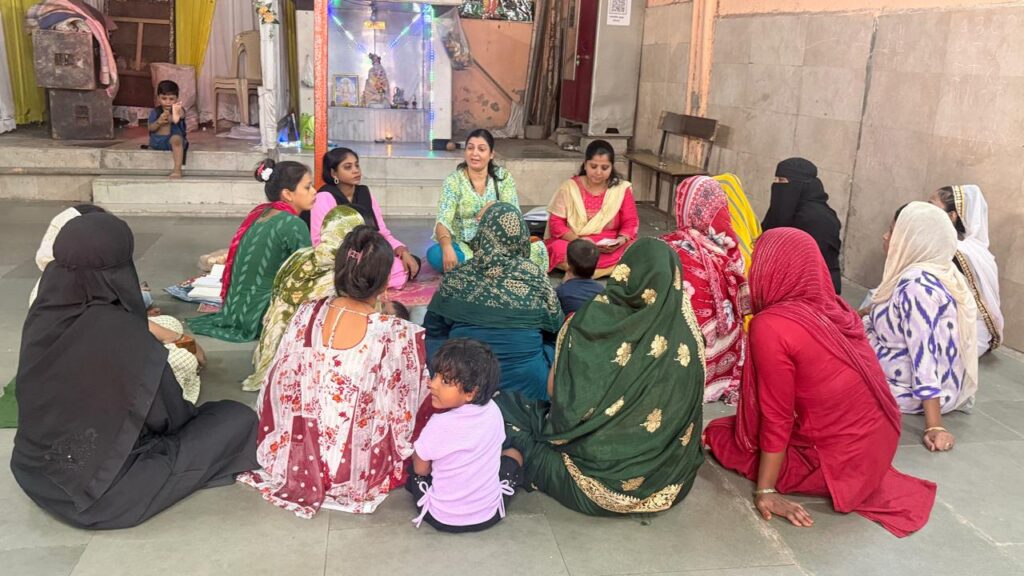
One such step has been the formation of Anganwadi Centre (AWC)-level Basti Vikas Samitis, bringing together ICDS Sevikas, Madatnis, MWRA members, CAGs, Community Champions, and ASHA/CHV workers. Monthly meetings are conducted through these committees, creating a regular platform for discussing local issues, reviewing service delivery challenges, and developing joint action plans. Whether related to immunization, nutrition, referrals, sanitation, or community mobilization, these committees promote coordinated action and shared accountability between community members and frontline service providers.
Instead of parallel efforts, this approach encourages shared responsibility, making the system more responsive and grounded in community realities.
What Begins to Change
As these connections strengthen, small but meaningful shifts are becoming visible.
Community members are no longer navigating systems alone—they are working together. Conversations are becoming more collective. Engagement with frontline workers is more coordinated. Responsibility is gradually being shared. The change is not sudden—but it is steady.
Looking Ahead
Sustainability is not a fixed endpoint—it is a process that continues to evolve.
The path forward lies in strengthening these connections—between people, platforms, and systems—so that communities can continue to organize and act with confidence.
SNEHA’s role, in this phase, is to enable and facilitate, while gradually stepping back.
Because in the end, sustainability is not defined by how long an organization stays.
It is defined by what continues after it steps away.
And in M/East ward, that story is still being written—
this time, by the community itself, together.
Share: